
Estate management in Nigeria is not for the faint of heart. It’s a complex, demanding, and often thankless job. But it’s also one of the most important roles in shaping the lives of residents and the success of communities.
Moreover, although estate management is often overlooked and underestimated, it is the backbone of a well-functioning community. It’s about more than just collecting fees and maintaining properties; it’s about creating a safe, harmonious, and prosperous environment where residents can truly flourish.
In this blog post, we’ll explore the multifaceted importance of estate management in Nigeria, digging deep into its impact on security, financial stability, community building, and overall quality of life.
In a country with diverse security challenges, estate management plays a vital role in protecting residents and their assets. Effective security measures, such as access control, surveillance, and emergency response protocols, are essential for creating a safe haven within the bustling urban landscape.
Estate managers are responsible for implementing and overseeing these measures, ensuring that residents feel secure and protected. By proactively addressing security concerns and fostering a culture of vigilance, estate management helps to deter crime and build a sense of trust within the community.
Sound financial management is crucial for the long-term sustainability of any estate. From collecting dues and managing budgets to planning for future investments, estate managers play a key role in ensuring the community’s financial health.
Efficient financial management enables estates to maintain infrastructure, provide essential services, and invest in improvements that enhance the quality of life for residents. This creates a virtuous cycle where satisfied residents are more likely to pay their dues on time, further contributing to the estate’s financial stability.
Beyond bricks and mortar, an estate is a collection of individuals and families seeking a sense of community and belonging. Estate management plays a pivotal role in fostering this connection through various initiatives:
A strong sense of community not only enhances resident satisfaction but also contributes to a safer and more resilient environment.
From maintenance requests to visitor management, estate operations involve numerous moving parts. Efficient management ensures that these processes run smoothly, minimizing disruptions and maximizing resident convenience.
By leveraging technology and implementing best practices, estate managers can:
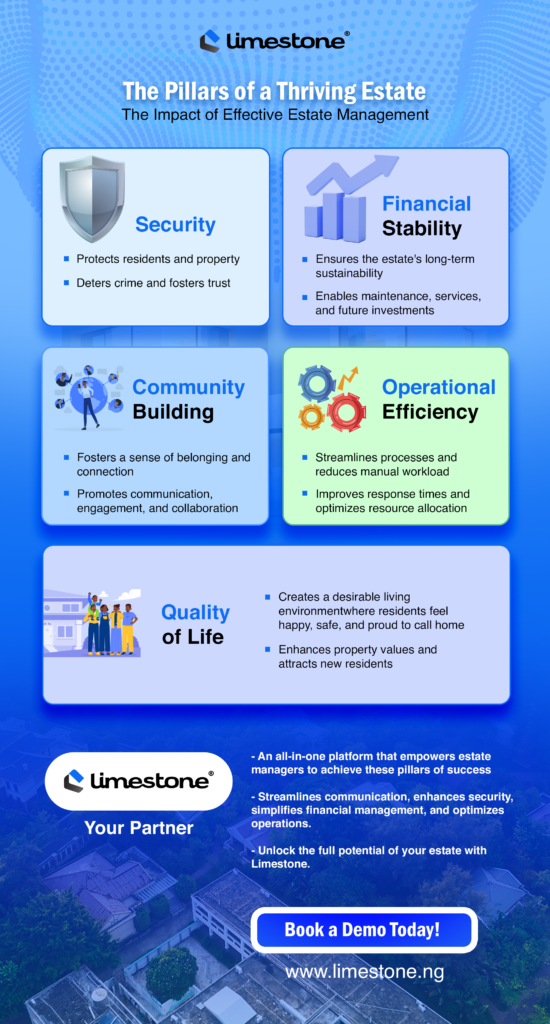
Ultimately, the goal of estate management is to create a desirable living environment where residents feel happy, safe, and proud to call their community home. This involves more than just maintaining the physical infrastructure; it’s about fostering a sense of belonging, providing essential services, and ensuring a high quality of life.
Effective estate management contributes to:
1. Security: Safeguarding Lives and Property
2. Financial Stability: The Backbone of a Thriving Community
3. Community Building: Fostering Connection and Belonging
4. Operational Efficiency: Streamlining Processes for a Smoother Experience
5. Quality of Life: Creating a Desirable Living Environment
Conclusion: